
Famous Cooks Female: The Chefs Who Changed Culture From Their Kitchens
History is filled with revolutions started on battlefields and in boardrooms. But some of the most profound changes in our world began in a much quieter place — the kitchen. Because a few brilliant women, armed with little more than a stovetop and an idea, launched a revolution that changed what we eat, how we cook, and even the fabric of our society.
The most famous cooks female history has produced didn’t just make dinner taste better. They changed how restaurants were run, how people thought about local ingredients, and even how school lunches were designed. As pioneers in a world that was not always ready for them, their impact extended far beyond food. Their legacy reflects influence, creativity, and remarkable persistence.
The Pioneers Who Rewrote the Rules
True culinary influence is not always about being the most technically skilled chef. Sometimes, it is about being the person who completely changes the game. And there is no better example of that than Julia Child.
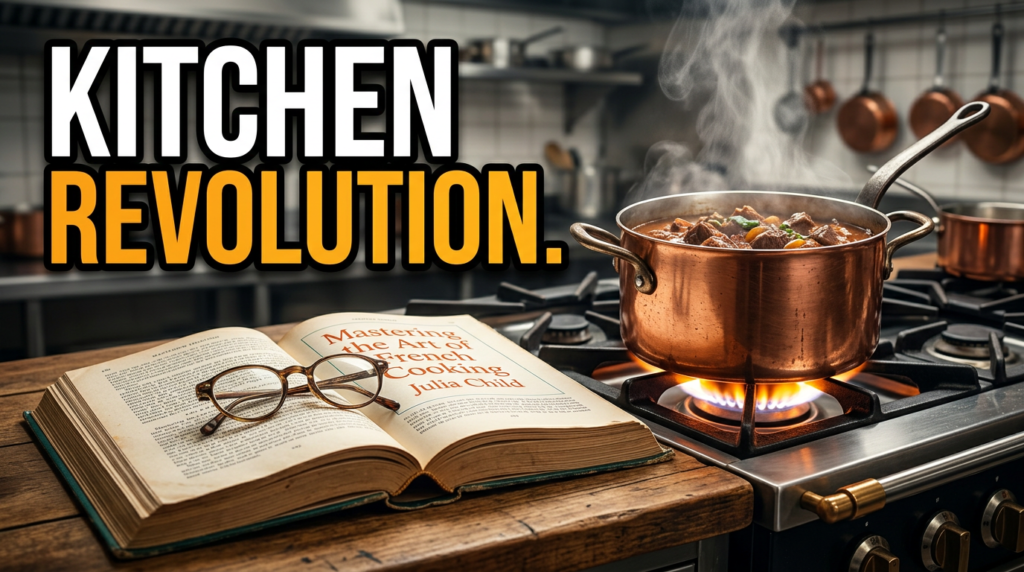
When she co-wrote Mastering the Art of French Cooking in 1961, and then launched The French Chef on television in 1963, she did something genuinely revolutionary. She took French cuisine — with all its mystique and intimidating techniques — and made it accessible to everyday people. Her humor, her famous unflappability when things went wrong on camera, and her sheer joy for cooking convinced millions of Americans that they, too, could create something wonderful at home. She did not just teach recipes. She translated an entire culture, empowering a generation of home cooks and fundamentally changing the way America thought about food. As Vogue has noted, Child’s ability to bring high culture into the average kitchen remains one of the most significant cultural contributions in American television history.
But long before Julia Child was on television, another woman was quietly rewriting the rules of fine dining. Her name was Eugénie Brazier.
Growing up on a small farm in France, Eugénie Brazier entered domestic service as a teenager before opening her own restaurant in Lyon in 1921. By 1933, she had become the first person to earn six Michelin stars across two restaurants. Known for her focus on simple, high-quality ingredients, she also mentored future culinary icons such as Paul Bocuse.
Decades later, Alice Waters transformed American dining when she opened Chez Panisse in Berkeley, California. Her commitment to fresh, local, and seasonal ingredients helped popularize the farm-to-table movement. She later expanded her influence through the Edible Schoolyard Project, which connected food education with classroom learning.
Despite their different paths, both women shared a common impact: they did more than cook. They educated, innovated, and helped reshape food culture for future generations.
Famous cooks female and the Anatomy of Influence
Many people assume the culinary world is a pure meritocracy that rewards only elite technique. But the women who became true cultural icons succeeded because they combined skill with something more — communication, identity, and trust.
Julia Child was not just a great cook. She was an extraordinary teacher. Her ability to translate complex techniques into something human, relatable, and even funny is exactly why she became a legend. That same ability to connect is a recurring theme across the most influential women in food history.
Consider Eugénie Brazier, who faced immense personal and professional challenges but stayed completely true to her vision of simple, ingredient-focused cuisine. Her authenticity built her reputation long before anyone had a word for personal branding. Similarly, female food writers like Fannie Farmer — who popularised standardised measurements using cups and spoons — and Amelia Simmons, who wrote the first American cookbook using local ingredients, transformed home cooking by making it more reliable and far more accessible. They were not simply sharing recipes. They were building systems of trust that genuinely empowered everyday home cooks.
These women built authority in male-dominated spaces by developing unique identities rather than following existing paths. Their distinct perspectives helped them stand out and succeed.
People do not just connect with food—they connect with the stories behind it. They want to know why a dish matters, where it came from, and what makes the creator’s vision unique. The chefs who understood this built stronger careers and lasting influence.
Their stories offer a simple lesson: being a good cook is not enough. In a creative industry, a strong identity is what people remember.
How Their Work Changed Real Life
The influence of these culinary pioneers was never confined to restaurant dining rooms or cookbook pages. It spilled out into homes, schools, and grocery stores — fundamentally changing how people live.
Julia Child’s greatest impact might have been making people less afraid of their own kitchens. That sounds small, but it is not. When an entire generation of home cooks becomes more confident, it transforms family meals, dinner parties, and the entire relationship people have with the food they prepare every single day. A chore becomes a creative act.
Alice Waters, meanwhile, changed how millions of Americans think about ingredients. Her relentless focus on local, organic food helped make seasonal cooking not just desirable but meaningful. And her Edible Schoolyard Project created a powerful new model for education — teaching children that food comes from the earth, not from a package, and that it connects us to the land, to our health, and to each other.
Other women changed the food world through innovation and entrepreneurship. Ruth Wakefield, who ran the Toll House Inn in the 1930s, created the chocolate chip cookie—whether by accident or careful experimentation. Either way, her invention became a staple of home baking for generations.
Marthe Distel also left a lasting mark by helping launch the renowned Le Cordon Bleu cooking school through a magazine and public classes. Their stories show that influence in food extends beyond the kitchen. Women have shaped the industry by building brands, institutions, and systems, yet historians continue to find that many of their contributions remain overlooked.
The Modern Revolutionaries Carrying the Torch
The legacy of these trailblazing women may be more relevant today than it has ever been. The modern culinary landscape has exploded. A chef’s influence is no longer confined to a restaurant. It can be built across social media, product lines, online classes, and pop-up experiences. The old path of working your way up in a kitchen to one day open a restaurant still exists — but the new paths are essentially limitless.
This means the very skills that made women like Julia Child and Alice Waters stand out are now competitive advantages in the creator economy. Clear communication. A strong, authentic point of view. A memorable style. The ability to teach and genuinely connect.
The women changing the industry today carry that same spirit forward. Dominique Crenn, who in 2018 became the first woman in the United States to earn three Michelin stars for her restaurant Atelier Crenn in San Francisco, blends artistry and cuisine in a way that is deeply personal and utterly unique. Or Clare Smyth — who grew up on a farm in Northern Ireland and became the first British female chef to run a three-Michelin-star restaurant in the UK — combining technical brilliance with a clear identity that is entirely her own.
They are not just exceptional chefs. They are storytellers and visionaries who have built a distinct identity in an incredibly crowded world. The next generation of iconic women in food may not fit any traditional mold — but they will, without question, be the ones who understand that their voice is just as important as their recipes.
What Their Stories Actually Teach Us
The most influential figures in food history all had a clear answer to one question: What do I stand for? Their style, their values, and their story were baked into everything they made. That consistency is what made people trust them — and keep coming back.
The biggest changes, too, often started surprisingly small. A new way of writing a recipe. A commitment to local farmers. A television show that was not afraid to make mistakes. These small acts created massive cultural waves that are still moving today.
The reason we still talk about women like Eugénie Brazier, Julia Child, and Alice Waters is not simply because they cooked well. It is because they made food bigger than food. They turned kitchens into classrooms, restaurants into movements, and simple recipes into cultural landmarks that continue to shape our world. Their kitchens were, in every sense, the starting point of something much larger than a meal.
FAQ Section
Q1: Who are the most famous cooks female culinary history has produced?
A: The most well-known famous cooks female history has given us include Julia Child, Eugénie Brazier, Alice Waters, Fannie Farmer, and Amelia Simmons. In the modern era, Dominique Crenn and Clare Smyth have continued that legacy at the highest levels.
Q2: Who was the first female chef to win six Michelin stars?
A: Eugénie Brazier was the first person — male or female — to earn six Michelin stars simultaneously, achieving this in 1933 across her two Lyon-based restaurants. That record stood for decades.
Q3: What did Julia Child do to change cooking?
A: Julia Child made French cuisine accessible to everyday American home cooks through her 1961 cookbook Mastering the Art of French Cooking and her 1963 television series The French Chef. Her warmth, humor, and unscripted style changed how millions of people approached cooking at home.
Q4: Who started the farm-to-table movement?
A:Alice Waters helped launch the farm-to-table movement in the United States through her restaurant Chez Panisse in Berkeley, California. She opened the restaurant in 1971 and focused on fresh, local, and seasonal ingredients.
Q5: Who was the first female chef in the US to earn three Michelin stars?
A: Dominique Crenn became the first woman in the United States to earn three Michelin stars in 2018 for her San Francisco restaurant, Atelier Crenn.